Play. is the most ambitious early-development platform ever built — harmonized across the world's most rigorous educational traditions, designed for a parent and a child to play together, and engineered to prepare a child for the future they will live in.
By age three, a child's brain forms more than a million new neural connections every second. By age five, the foundations of vocabulary, attention, empathy, and self-regulation are largely set. By age six, the trajectory is established — and from that point on, education is mostly an act of catch-up.
The decade before a child enters elementary school is the highest-leverage decade in the human lifespan. It is also the decade we hand off most carelessly — to whatever screens, apps, and ad-hoc curricula happen to be nearby.
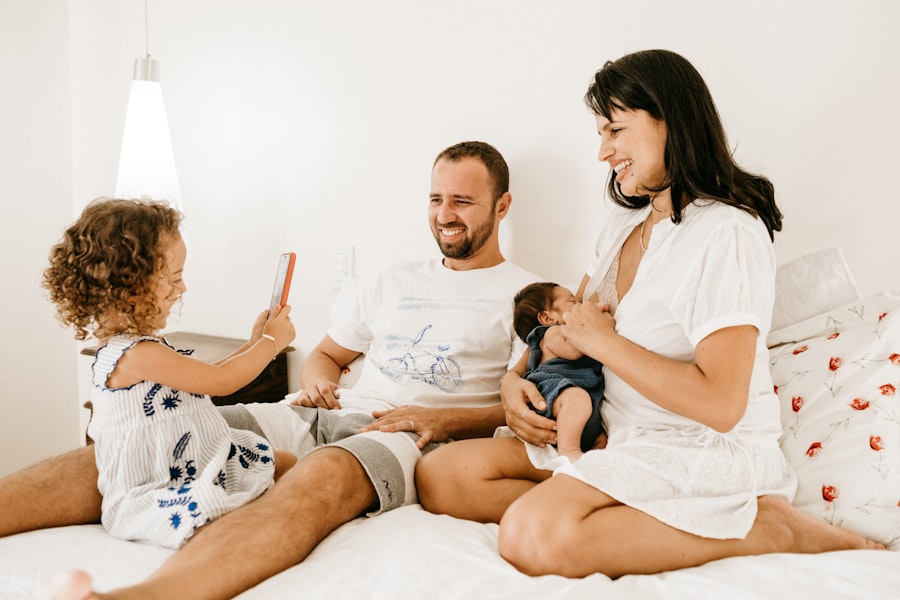
Play. is built for parents and educators who refuse to leave this to chance. Stage the right game at the right age. Play it with your child. Watch them become.
The library is organized around five pedagogical pillars, each containing dozens of granular learning objectives. Together they constitute the architecture of human capability we believe a child needs to flourish in the world they will inherit.
The foundation everything else is built on. Language acquisition, narrative voice, listening discipline, multilingualism — the discipline of being understood, and of understanding. The skill that determines, more than any other, how far an idea can travel.
Number sense before number facts. Geometry before geometry. The intuition for quantity, comparison, division, pattern, and structure that lets a child later reason confidently about mathematics, statistics, finance, and the world.
The scientific method, before the words. Predict, observe, compare, revise. Children are already natural scientists at two — Play. is built to keep them that way through eighteen, raising the kind of adults who solve problems instead of inheriting them.
Classification, pattern recognition, cause-and-effect reasoning, source evaluation. The habits of mind that distinguish a child who knows what to do with information from one who is overwhelmed by it — the most valuable skill set of the next century.
Empathy is a skill. So is consent. So is fairness, gentleness, self-regulation, and the discipline of treating other people — and other living things — with the care they deserve. The pillar that holds the others up. The one employers, partners, and societies will pay a premium to see.
We didn't invent these practices. We spent three years studying them — across continents, decades, and disciplines — and then we did something no one had done before. We harmonized them.
Every learning objective in Play. is cross-referenced against the world's most rigorous educational frameworks — the curricula and milestone standards that nations, accreditors, and pediatricians turn to when the question is what should a child learn, and when:
Children as protagonists of their own learning. The hundred languages of childhood.
Prepared environment, sensorial materials, the absorbent mind. Sandpaper letters, beadwork, practical life.
Kindergarten. The "gifts" — geometric play sets that taught number, form, and beauty together.
The zone of proximal development. Why playing with a more-capable adult unlocks what playing alone cannot.
Stage theory. The cognitive milestones that determine which game is right at which age.
Scaffolding. The spiral curriculum. The idea that any subject can be taught at any age, at the right level.
Stages of psychosocial development. Trust, autonomy, initiative, industry — the emotional ladder.
Executive function research, neuroscience of self-regulation, the empirical layer on top of every tradition.
A few minutes a day. A few years of repetition. The skills below are what a child has — in their body, in their voice, in their instincts — when they grow up inside this library.
"Play is the highest form of research."— Albert Einstein
Play. is not a curriculum that demands hours. It's a library you visit. Over eighteen years, that's five hundred hours of deliberate play with your child — possibly the most consequential five hundred hours you will ever spend.
Open the library. Pick a game appropriate for your child's age and the skill you want to build today.
Long-press the wordmark for parent guidance — the origin of the practice, what you're teaching, what skills it builds.
Ten to fifteen minutes together. Household items only. The child leads; you scaffold. No screens past this one.
Twice a week, or every day if you can. A different game each time. The same library for eighteen years.
The most leveraged dollar in education is the dollar spent before age six. Play. makes it spendable — at scale, with rigor, anywhere a parent and child have fifteen minutes and a kitchen table.
We're working with select schools, daycares, employers, foundations, and ambitious families to scale Play. into the canonical early-development platform of the decade. To license the library, sponsor it for your community, or simply learn more — start with a conversation.
Play. is rolling out with select schools, daycares, employers, and ambitious families. Grab a time and I'll walk you through the library myself — and hear how you'd put it to work for your children.